EU Data Centre Regulation Tracker: Energy, Heat Reuse and PUE Rules by Country

Data centre operators in the EU are now subject to binding energy and heat reuse rules, and the requirements differ sharply by country. This tracker summarises what applies where: the EU-wide framework, each national transposition, thresholds, quotas, deadlines and penalties – in one place. Last updated: 27 July 2026.

Key takeaways

  • The EU Energy Efficiency Directive (EED, 2023/1791) requires annual public reporting for data centres with ≥500 kW IT power and waste heat reuse for facilities >1 MW unless technically or economically infeasible.
  • Germany is the strictest market: waste heat reuse quotas of 10/15/20% from July 2026/2027/2028, 100% renewable electricity by 2027, PUE ceilings, and fines up to €100,000 – applying from just 300 kW.
  • National approaches diverge widely: France regulates from 100 kW, Austria has obligations without quotas, the Nordics rely on voluntary district heating partnerships, the Netherlands and Ireland use moratoriums and grid connections as the lever.
  • A second EU regulatory wave lands in 2026: the Data Centre Energy Efficiency Package, an EU-wide sustainability rating scheme, and an expected Cloud and AI Development Act.
  • Site selection economics are shifting from “cheap power + cool climate” to “cheap power + cool climate + heat off-taker”.

The EU-wide framework

Three instruments form the federal layer. The recast Energy Efficiency Directive (EED, Directive (EU) 2023/1791, in force since 2023) created the first EU-wide obligations: annual public reporting of energy performance for data centres with an installed IT power demand of 500 kW or more, and a soft mandate for facilities above 1 MW to reuse waste heat unless it is technically or economically infeasible. The Renewable Energy Directive (REDIII) adds renewable energy obligations, and a March 2024 Delegated Regulation established a common EU rating scheme for data centre sustainability reporting.

Definitions

  • EED – the EU Energy Efficiency Directive (2023/1791), the primary EU law regulating data centre energy performance.
  • PUE (Power Usage Effectiveness) – total facility energy divided by IT energy; 1.0 is theoretically perfect, and regulatory ceilings typically target 1.2–1.5.
  • Waste heat reuse – capturing heat rejected by IT equipment and supplying it to consumers such as district heating networks, instead of venting it to the atmosphere.
  • Heat off-taker – a customer (city network, industrial site, campus) that accepts and uses a data centre’s waste heat.

Country-by-country tracker

CountryApplies fromKey obligationsEnforcement
Germany (EnEfG, 2023)300 kWPUE ceilings; hard waste heat reuse quotas of 10/15/20% from July 2026, 2027, 2028; 100% renewable electricity by 2027Fines up to €100,000 per violation
France100 kW (reporting)Energy reporting from 100 kW; waste heat recovery obligations from 1 MWNational energy authority oversight
Austria (EEffG, April 2024)Reporting thresholds per EEDReporting plus a general waste heat utilisation obligation; no tiered quotasAdministrative penalties
NetherlandsCase-by-caseMoratoriums and grid connection conditions used as primary lever; hyperscale permits restrictedPermitting and grid access
IrelandCase-by-caseDe facto moratorium in Dublin region via grid connection policyGrid operator (EirGrid) conditions
Nordics (SE, FI, DK, NO)VoluntaryHeat reuse driven by mature district heating markets and commercial partnerships rather than mandatesMarket-based
Switzerland (non-EU)>2 GWh waste heatData centres above 2 GWh must supply waste heat to third parties at costCantonal implementation

The 2026 second wave

The European Commission has confirmed a Data Centre Energy Efficiency Package alongside the Strategic Roadmap on Digitalisation and AI for the Energy Sector (Q1–Q2 2026), plus an EU-wide sustainability rating scheme adopted in Q2 2026. Minimum performance standards and a Cloud and AI Development Act are expected to follow. For operators this means the reporting-only phase is ending: performance floors and rating-linked obligations are next.

What this means for operators and investors

  • Site selection now has a third variable: proximity to a heat off-taker is becoming as important as power price and climate.
  • High-temperature liquid cooling (60–70°C return water) turns compliance into revenue: it is near-ready district heating supply, while low-temperature loops need heat pumps in between.
  • Germany rewards early movers: facilities designed for heat reuse gain a permitting argument, not just an ESG talking point.
  • Retrofitting heat reuse into an existing air-cooled facility is far more expensive than designing for it – oversize pipes and reserve dry cooler positions in phase one.

Frequently asked questions

Do the EU rules apply to small server rooms?

No. The EED reporting obligation starts at 500 kW installed IT power. Germany goes further, applying national obligations from 300 kW, and France requires reporting from 100 kW.

Is waste heat reuse mandatory everywhere in the EU?

Not unconditionally. The EED requires reuse for facilities above 1 MW unless technically or economically infeasible – the feasibility test is the operative clause. Germany is the exception, with hard quotas that apply regardless.

Which EU country is hardest for data centre compliance?

Germany, by a distance: the lowest threshold (300 kW), hard reuse quotas, a renewable electricity mandate from 2027, PUE ceilings and six-figure fines.

Related articles

Data Centre Waste Heat Reuse Regulation in the EU

Key takeaways

  • The EU Energy Efficiency Directive (2023/1791) requires annual public reporting from 500 kW IT power and waste heat reuse above 1 MW unless infeasible.
  • Germany is the strictest: reuse quotas of 10/15/20% from July 2026/2027/2028, 100% renewable electricity by 2027, fines up to €100,000 – from just 300 kW.
  • National rules diverge: France regulates from 100 kW, Austria has no quotas, the Nordics rely on voluntary district heating partnerships, the Netherlands and Ireland use moratoriums and grid access.
  • A second EU wave arrives in 2026 – site selection is shifting to “cheap power + cool climate + heat off-taker”.

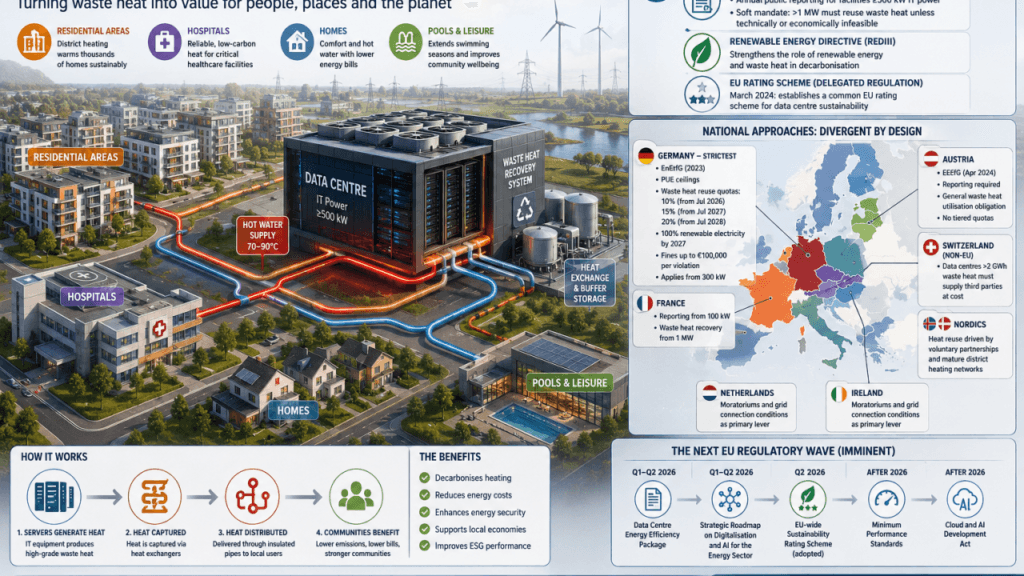
Heat reuse from data centres is no longer purely voluntary in Europe. The 2023 recast Energy Efficiency Directive (EED, Directive (EU) 2023/1791) created the first EU-wide framework: annual public reporting for facilities ≥500 kW IT power, and a soft mandate for facilities >1 MW to reuse waste heat unless technically or economically infeasible. The Renewable Energy Directive (REDIII) and a March 2024 Delegated Regulation establishing a common EU rating scheme complete the federal layer.

Map and overview of EU data centre waste heat reuse regulation by country

National transpositions diverge sharply. Germany’s Energy Efficiency Act (EnEfG, 2023) is the strictest: PUE ceilings, hard waste heat reuse quotas (10/15/20% from July 2026, 2027, 2028), 100% renewable electricity by 2027, and fines up to €100,000 per violation, applied from 300 kW. France imposes reporting from 100 kW and waste heat recovery from 1 MW. Austria’s EEffG (April 2024) introduces reporting and a general waste heat utilisation obligation but no tiered quotas. Switzerland (non-EU) requires data centres >2 GWh waste heat to supply third parties at cost. The Nordics drive heat reuse mostly through voluntary partnerships with mature district heating networks rather than mandates. The Netherlands and Ireland have used moratoriums and grid connection conditions as their primary lever.

A second EU regulatory wave is now imminent. The Commission has confirmed a Data Centre Energy Efficiency Package alongside the Strategic Roadmap on Digitalisation and AI for the Energy Sector in Q1–Q2 2026, plus an EU-wide sustainability rating scheme adopted in Q2 2026. Minimum performance standards and a Cloud and AI Development Act are expected to follow. Site selection economics across the bloc are shifting from ‘cheap power + cool climate’ to ‘cheap power + cool climate + heat off-taker’.

#DataCenters #WasteHeatRecovery #EnergyEfficiency #DistrictHeating #EUPolicy #EnEfG #Sustainability #GreenIT #Colocation #DigitalInfrastructure

https://www.linkedin.com/pulse/data-centre-waste-heat-reuse-regulation-eu-andris-gailitis-o4igf

Related articles:

Be Among the First: Join the Launch of a Next-Generation AI Data Center in Riga

Key takeaways

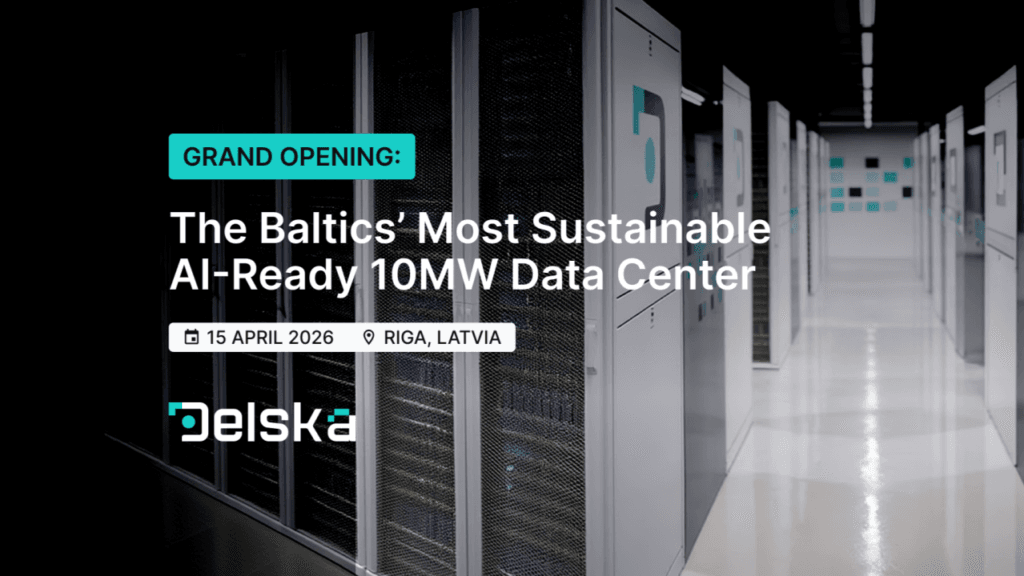
  • Delska EU North Riga LV DC1 – a 10 MW facility expandable to 30 MW, designed for AI, HPC and sovereign digital infrastructure – opened on 15 April 2026 in Riga.
  • Up to 250 kW per rack with hybrid CoolWall air + liquid cooling, powered by 100% renewable energy.
  • Tier III design with 99.982% uptime and a 400G connectivity backbone across Europe.

On April 15, 2026, we will unveil something that goes beyond a traditional data center. We are opening Delska EU North Riga LV DC1 – the most advanced and sustainable data center ever built in the Baltics. A 10 MW facility designed not for today’s workloads, but for what comes next: AI, HPC, and sovereign digital infrastructure in Northern Europe.

Delska EU North Riga LV DC1 - grand opening of the most sustainable AI-ready 10MW data center in the Baltics

This is a strategic milestone not only for Delska, but for the region.

To mark this launch, we are bringing together government representatives, global technology partners, and senior industry leaders to explore the future of compute, energy, and digital sovereignty.

📅 April 15, 2026
📍 Riga, Latvia · In-person & Live Stream (RSVP required)
👉 Register: delska.com/lvdc1-launch-event

EU North Riga LV DC1 is built with a clear promise: infrastructure must scale with ambition.

  • 10 MW capacity, expandable to 30 MW on secured land with reserved power
  • Up to 250 kW per rack to support AI and HPC workloads at scale
  • Hybrid cooling architecture combining CoolWall air and liquid cooling
  • Powered by 100% renewable energy from Northern Europe
  • Designed to Tier III standards with 99.982% uptime
  • 400G connectivity backbone with low-latency access across Europe

This is not just an improved data center. It is a platform for next-generation compute deployment.

The opening will take place in two parts.

Private Opening Ceremony (invitation-only | live streamed) – featuring government leaders and strategic partners, setting the tone for the region’s digital future.

Executive Program (RSVP required) – with contributions from Dell Technologies, Veeam, 11Stream, and Delska, alongside:

  • Forward-looking perspectives on AI infrastructure and sovereign compute
  • Exclusive guided access to the facility
  • High-value networking with the regional and international tech ecosystem

We also have opened reservation access for organizations planning their next phase of infrastructure growth. If you cannot attend our launch event but would like to tour the facility on a private visit, please drop us a message – sales@delska.com.

👉 Pre-book your capacity: delska.com/data-centers/eu-north-riga-lv-dc1

Facilities like this are not built often. And access at this stage is even rarer.

If you are shaping infrastructure strategy for the coming years – this is where the conversation starts. Welcome!

#AIInfrastructure #DataCenters #SovereignCompute #GreenEnergy #Baltics #DigitalTransformation

https://www.linkedin.com/pulse/among-first-join-launch-next-generation-ai-data-center-gailitis-aroof

Related articles:

The future of AI computing is blasting off into orbit!

Key takeaways

  • In November 2025, Starcloud-1 trained AI models in orbit on an NVIDIA H100 – the first AI model training in space.
  • Orbital data centers promise near-constant solar power (up to 8x more effective than ground panels), zero water cooling and unlimited scalability.
  • Starcloud, Aetherflux, SpaceX, Blue Origin, Google and Europe’s ASCEND project are all racing toward orbital compute.
  • Main challenges – deployable radiators, radiation hardening, latency and launch costs – are falling fast.

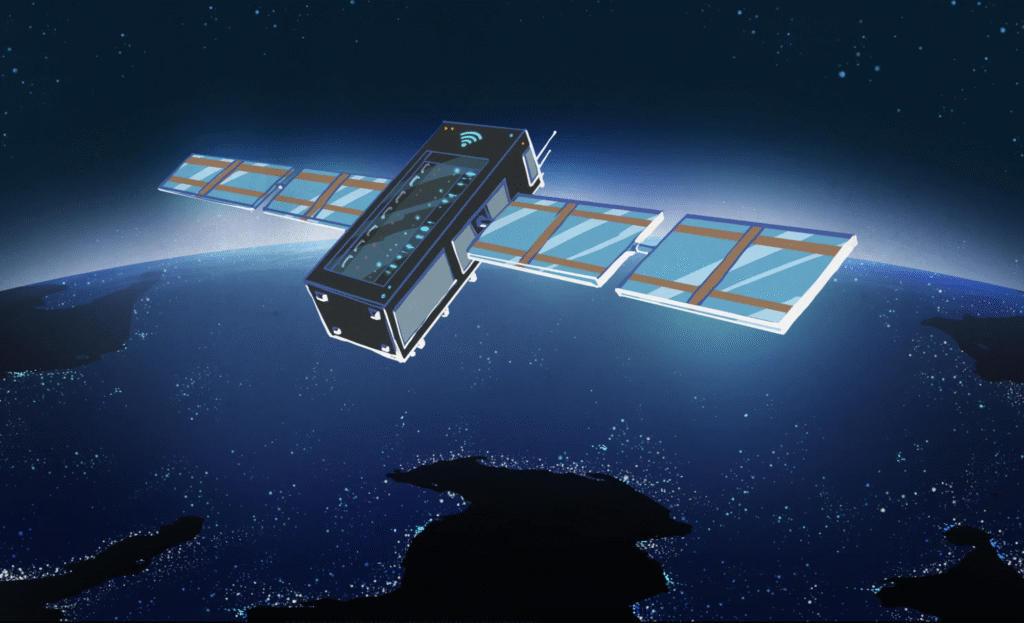
As explosive AI growth pushes terrestrial data centers to their limits – devouring massive electricity, guzzling billions of gallons of water for cooling, facing land shortages, permitting delays, and grid overloads – a revolutionary alternative is emerging: orbital data centers.What once sounded like pure sci-fi is now reality. Just last month (November 2025), Nvidia-backed startup Starcloud (formerly Lumen Orbit) launched Starcloud-1, a compact satellite carrying a full Nvidia H100 GPU – 100x more powerful than any prior space compute hardware.And it worked spectacularly: In orbit, they successfully trained and ran multiple AI models, including Andrej Karpathy’s NanoGPT on the complete works of Shakespeare, and Google’s open-source Gemma LLM. This marks the first-ever AI model training in space, proving data-center-class GPUs can thrive in orbit.The advantages are mind-blowing:

The current image has no alternative text. The file name is: Screenshot-2025-12-13-at-11.23.49.png
  • Near-constant solar power: In optimized sun-synchronous orbits, satellites get up to 8x more effective energy than ground panels, with no night cycles or weather interruptions.
  • Zero water cooling: Waste heat radiates directly into the cold vacuum of space – no evaporation towers, no freshwater strain.
  • Unlimited scalability: No land acquisition, no local opposition, no grid upgrades needed.
  • Potentially 10x lower long-term costs: Even factoring launches, abundant clean energy and passive cooling slash operational expenses.
  • Sustainability boost: Orbital facilities could dramatically cut AI’s carbon footprint while preserving Earth’s precious resources.

The momentum is unstoppable. Major players are racing ahead:

  • Starcloud plans clusters with multiple H100s and Nvidia’s next-gen Blackwell GPUs in 2026–2027, targeting commercial workloads like satellite imagery inference for disaster response.
  • Aetherflux unveiled “Galactic Brain” – aiming for the first commercial orbital AI node in Q1 2027, leveraging space solar for unrestricted compute.
  • SpaceX (via Elon Musk) is adapting high-power Starlink V3 satellites for AI processing, with massive deployment potential via Starship.
  • Blue Origin has been quietly developing orbital data center tech for over a year.
  • Google’s Project Suncatcher explores solar-powered AI satellite constellations.
  • Axiom Space launching orbital data nodes soon.
  • Europe’s ASCEND project (led by Thales Alenia Space) confirmed feasibility for gigawatt-scale by mid-century.

Of course, real engineering challenges exist. Cooling dense racks demands large deployable radiators (governed by Stefan-Boltzmann radiation physics), radiation hardening for reliable operation, occasional latency for ground links, and upfront launch costs. But plummeting reusable rocket prices (thanks to Starship), innovative lightweight radiators, and proven demos like Starcloud-1 are rapidly closing those gaps.We’re witnessing the dawn of a new era: Abundant, green, scalable compute powering the AI revolution without burdening our planet. Orbital data centers aren’t just hype – they’re the sustainable path forward.What excites you most about this frontier? Will space host the world’s largest AI factories by 2040? Drop your thoughts below!

Subscribe & Share now if you are building, operating, and investing in the digital infrastructure of tomorrow.

#AI #SpaceTech #Innovation #ArtificialIntelligence #Sustainability #FutureOfComputing #OrbitalDataCenters #SpaceAI #AIRevolution #SustainableTech #TechInnovation #DeepTech

https://www.linkedin.com/pulse/future-ai-computing-blasting-off-orbit-andris-gailitis-c2ewf

Related articles:

When Energy-Saving Climate Control Puts Drivers to Sleep: The Hidden CO₂ Problem in Modern Cars

Key takeaways

  • CO₂ buildup in car cabins – often caused by automatic HVAC recirculation – causes drowsiness: with four occupants, levels can reach 2,500 ppm within five minutes.
  • Outdoors CO₂ is about 420 ppm; above 1,500–2,000 ppm most people feel distinctly heavy-eyed. This is a road safety issue, not just comfort.
  • Modern cars flip into recirculation automatically to save energy, often without any clear dashboard indicator.
  • Awareness is near zero on mainstream driver forums; only niche EV and RV communities discuss cabin CO₂.
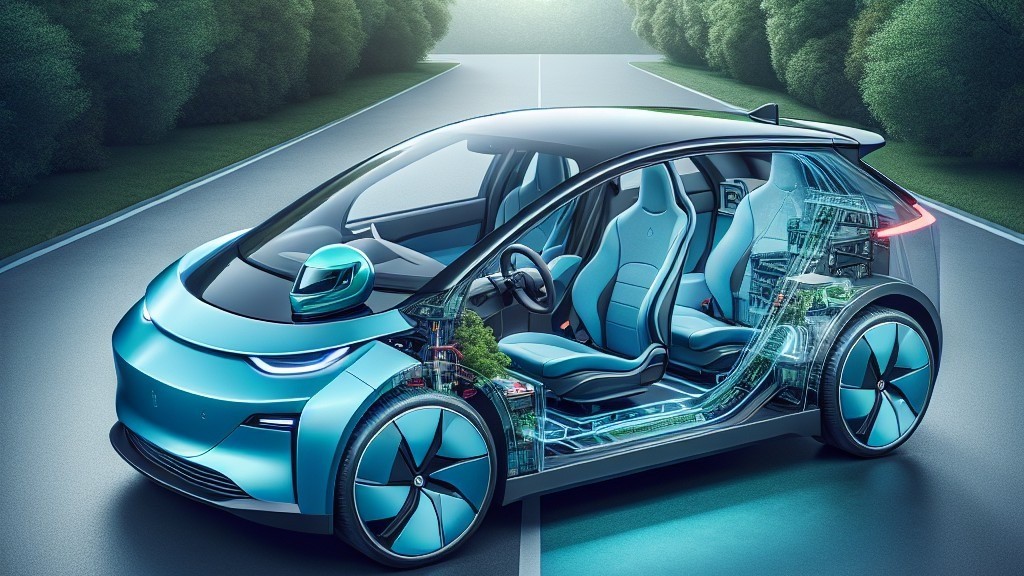
EV car
Eletric car
Green car

A few weeks ago, a Latvian TV segment by journalist Pauls Timrots caught my attention. He talked about that strange heaviness drivers sometimes feel on long trips — not quite fatigue, not quite boredom, but a foggy drowsiness that creeps in, especially at night or in stop-and-go traffic.

What struck me is that most people know the feeling but don’t have a name for it. We assume it’s just “tiredness.” Yet the culprit, in many cases, is something more invisible: carbon dioxide (CO₂) buildup inside the cabin.

I first learned about this years ago in tropical cities, where taxis often ran their air conditioning permanently in recirculation mode. With the fresh-air intake closed and windows up, CO₂ levels in those cabs would climb to levels I’d normally only expect in a packed lecture hall with no ventilation. I once measured 5,000 ppm in a taxi — a concentration known to cause drowsiness, headaches, and sluggish thinking.

Show the driver the “fresh air” button, and within minutes the numbers fell, along with the yawns.

Fast forward to today. The difference is that the “driver” making that decision in your car is often not you — it’s the HVAC algorithm. To save energy, modern cars (whether ICE, hybrid, or EV) lean heavily on recirculation. Some models even flip into recirc automatically, without a clear dashboard indicator, sometimes even in manual climate mode. Unless you’re carrying a CO₂ sensor (like an Aranet), you may never know why you suddenly feel like nodding off.


What the Science Shows

Outdoors, CO₂ sits at about 420 ppm. Most building standards aim to keep indoor levels below 1,000 ppm, because research links higher levels to impaired concentration and increased fatigue. By 1,500–2,000 ppm, many people feel distinctly heavy-eyed.

And in cars? Levels climb shockingly fast. One Swedish study found that with four people in a closed cabin, CO₂ reached 2,500 ppm within five minutes — and 6,000 ppm within 20 minutes — even with some ventilation. In real-world driving tests, single-occupant vehicles often cross 1,500 ppm in less than half an hour when the HVAC is favoring recirculation.

That’s not just an air quality number. That’s a road safety issue.


What AI Tools Reveal About Awareness

I ran this topic through a few AI-powered trend analysis tools and forum scans, and the pattern was striking:

  • On mainstream driver forums, there’s almost zero discussion of CO₂. People talk about foggy glass, stale air, or “feeling tired,” but rarely connect it to cabin CO₂.
  • In niche communities — Tesla owners, Rivian forums, overlanders, and RV groups — the conversation is growing. These are the people who buy CO₂ meters and post screenshots of 2,000+ ppm.
  • Academic research is solid and ongoing, but mostly locked away in journals. Few car magazines or mainstream outlets ever reference it.
  • Automakers? Silent. Some premium brands include CO₂ sensors, but they’re marketed as “air quality features” (to block pollution), not as safety tools.

What AI essentially shows is a disconnect: the science is mature, the user experience is common, but the public conversation is minimal.


Practical Fixes for Drivers

The good news is that once you know what’s happening, it’s not hard to fix:

  • Prefer fresh air over recirculation when cruising.
  • If your car insists on switching back to recirc, try toggling it off manually (some Toyotas respond to this reset trick).
  • In stubborn systems, crack the window 1–2 cm. Noisy, yes. Effective, absolutely.
  • Keep your cabin filter clean — a clogged filter nudges the HVAC to favor recirc.
  • Consider carrying a small CO₂ meter. Once you’ve seen a cabin climb past 1,500 ppm, you’ll never unsee it.

For Automakers and Fleets

This is an easy win for safety and trust.

  • Show recirculation state clearly in the UI. Don’t override it without a visible cue.
  • Add a basic CO₂ sensor and bias toward fresh air when levels rise.
  • Offer a persistent “Fresh Air Priority” setting.
  • For fleets: train drivers to recognize drowsiness linked to air quality, not just lack of sleep.

Why It Matters

Older cars did what you told them: fan on, recirc off, end of story. Newer vehicles are smarter, but their logic is mostly about efficiency and temperature comfort — not human alertness. Energy savings are important. But alert drivers are non-negotiable.

This is one of those invisible safety issues that deserves daylight. Just as we take seat belts, ABS, and air filters for granted, we should start treating fresh air as a core safety feature, not a luxury setting.

Until then, the responsibility is on us as drivers: know the signs, press the button, crack the window.

Because the next time you feel a wave of unexplained drowsiness behind the wheel, it may not be your body telling you to sleep. It may just be the air you’re breathing.


Curious to hear from others: Have you ever noticed this effect? Have you measured CO₂ in your car? And should automakers be more transparent about it?

Subscribe & Share now if you are building, operating, and investing in the digital infrastructure of tomorrow.

#RoadSafety #DriverSafety #AutomotiveInnovation #VehicleSafety #AirQuality #CarbonDioxide #CabinAir #HealthAndSafety #HumanFactors #TransportationSafety #FutureOfMobility #SustainableTransport #SmartCars #ConnectedCars #AutomotiveEngineering #ArtificialIntelligence #AIInsights #DataDriven #SafetyFirst #LinkedInThoughtLeadership

https://www.linkedin.com/pulse/when-energy-saving-climate-control-puts-drivers-sleep-andris-gailitis-4rlif

Related articles:

Proudly powered by WordPress | Theme: Baskerville 2 by Anders Noren.

Up ↑